
Anchored in comfort. Shaped around you.

Permanent dentures. A more secure smile.

If you want replacement teeth with more support, permanent dentures are worth a conversation. At Dentures Plus, we help you understand fixed and removable implant-supported options—and what each could mean for your everyday life.

Most Insurances Accepted

Portrait of a Dentures Plus patient with a restored smile
Start with the essentials

What are permanent dentures?

People use “permanent dentures” to describe replacement teeth connected to dental implants rather than supported only by the gums. The implants sit in the jawbone and form the foundation; the denture or prosthesis replaces the visible teeth.

As healing progresses, bone bonds with the implants in a process called osseointegration. That connection helps support your bite. Some dentures attach to implants and come out for cleaning. Others are fixed in place and only removed by a dental professional. Knowing that difference is the first step toward choosing a design that suits you.

Understand your choices

Types of permanent dentures

The names can overlap. What matters is how the teeth are attached, whether you remove them, and whether you are restoring one arch or both.

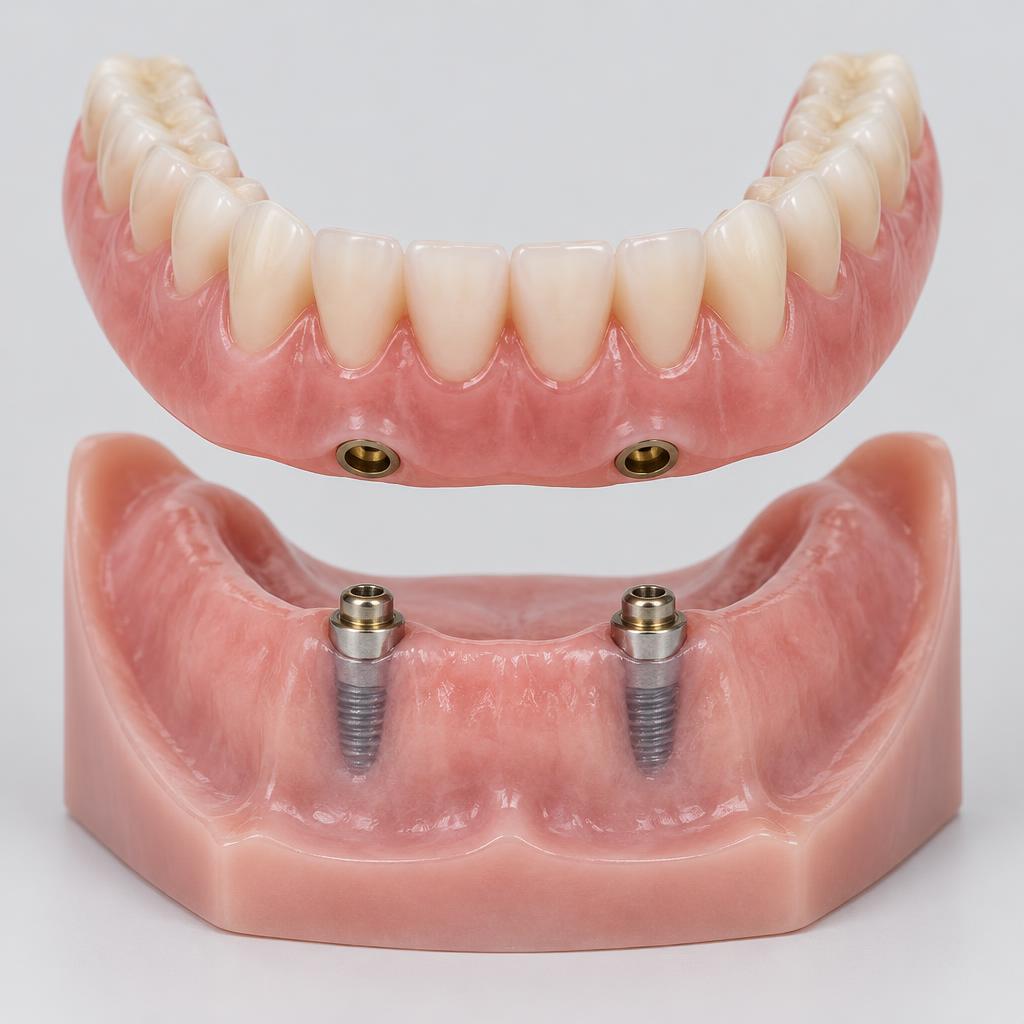
Photorealistic clinical model of implant-retained dentures

Removable · implant anchored

Implant-retained dentures

Often called snap-in dentures, this design connects a removable denture to attachments on dental implants. The attachments help hold your teeth steady during the day, while you can still take the denture out for cleaning. It offers a familiar daily routine with added support beneath your smile.

Daily care

Remove and clean as directed; clean around the implant attachments.
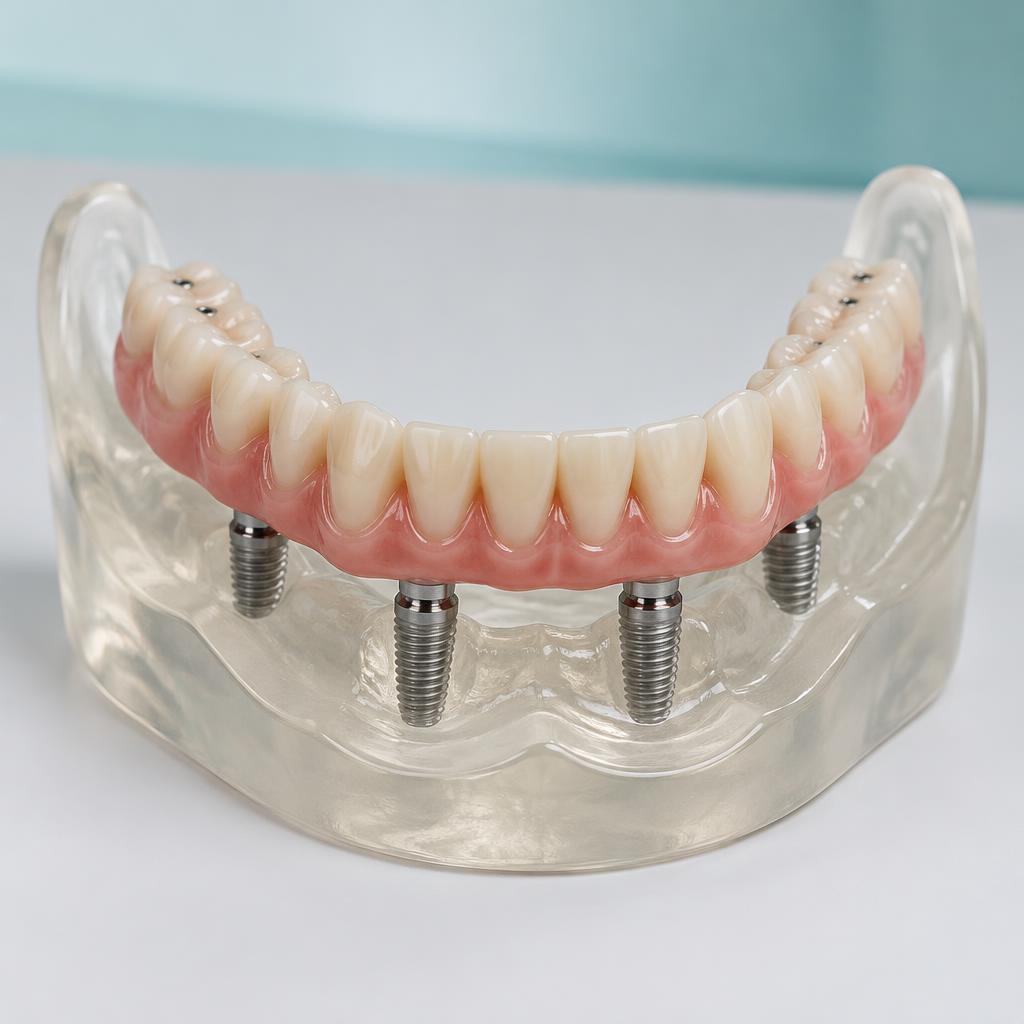
Photorealistic clinical model of fixed implant-supported dentures

Fixed · one complete arch

Fixed implant-supported dentures

A complete upper or lower set of replacement teeth is secured to implants in your jaw. You do not take it out at home; your dental team can remove it when professional service is needed. The number and placement of implants are planned around your bone, bite, and the shape of the restoration.

Daily care

Brush daily and clean beneath the prosthesis with recommended tools.

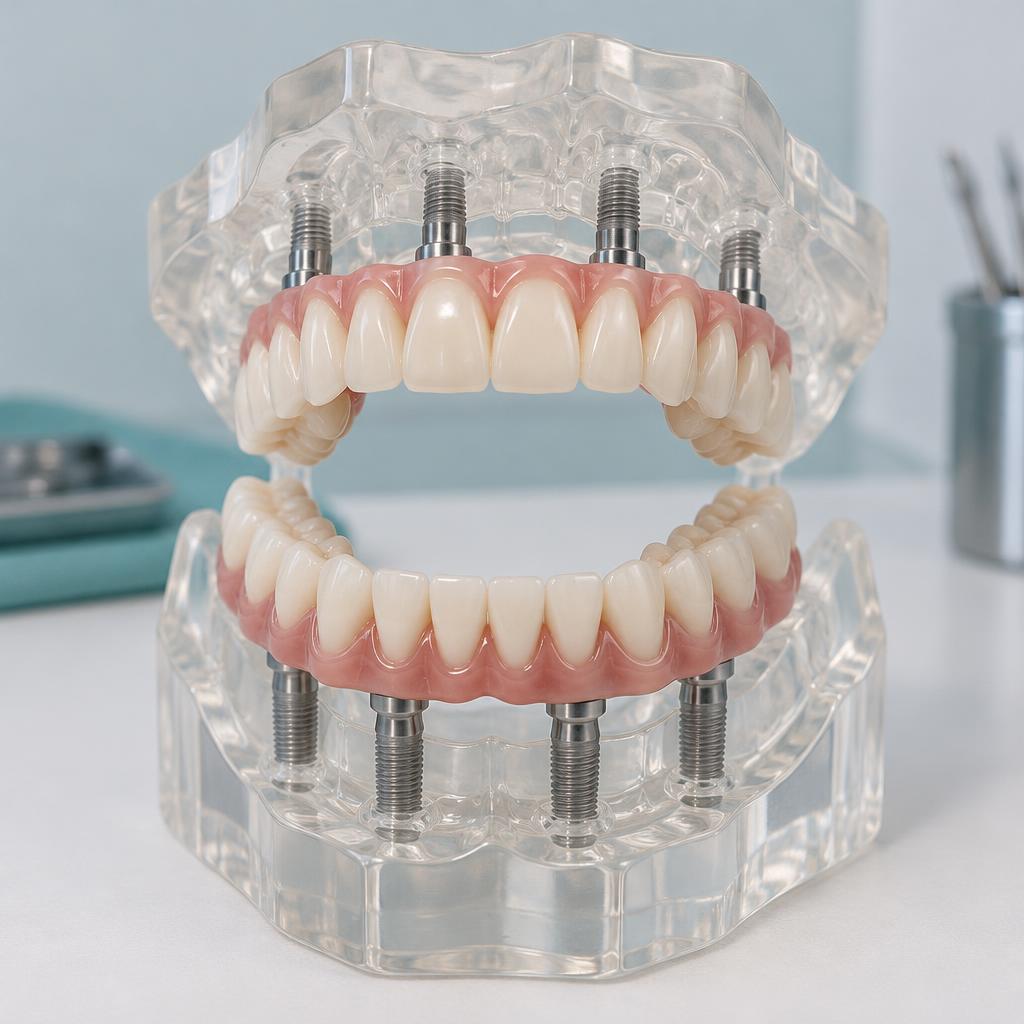
Photorealistic clinical model of full-mouth implant restoration

Fixed · upper and lower arches

Full-mouth implant restoration

When teeth need replacing in both jaws, full-mouth restoration brings the upper and lower arches into one coordinated plan. Each arch has its own implant support, and the two sets of teeth are designed to work together. Full-arch approaches, including All-on-4 where appropriate, describe how implants support the teeth—not a separate kind of tooth material.

Daily care

Daily cleaning around both restorations and regular professional maintenance.

Illustrations show example designs. Implant placement, attachments, and tooth materials are personalized to your treatment plan.

From one tooth to a full smile

Implant restoration options at Dentures Plus

Implants can support much more than a full denture. Compare the options for a single gap, several missing teeth, or a complete arch. Crowns and bridges replace individual teeth or a section of teeth; overdentures and full-arch restorations replace a larger set.

Implant restorations at Dentures Plus: illustrations, descriptions, replacement scope, attachment, and daily care
RestorationHow it worksTeeth replaced & attachmentDaily care
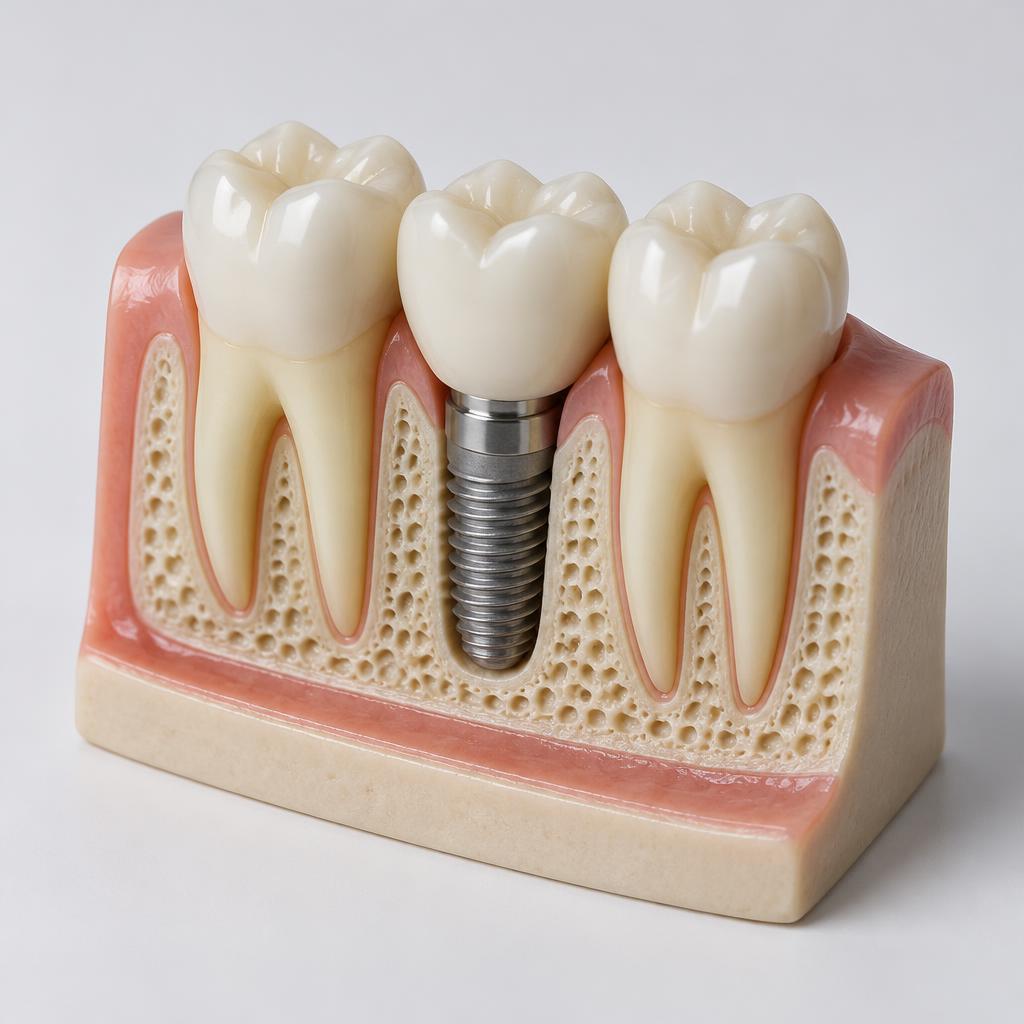
Clinical model of one tooth crown on a titanium implant between two natural teeth01Single-tooth implant crownHow it worksAn implant takes the place of a missing tooth root, and a custom crown forms the visible tooth above it. This restores an individual gap without turning the neighboring teeth into supports for a bridge.Teeth replaced & attachment

One missing tooth

Fixed crown

Daily careBrush and clean between the crown and neighboring teeth, including along the gumline.
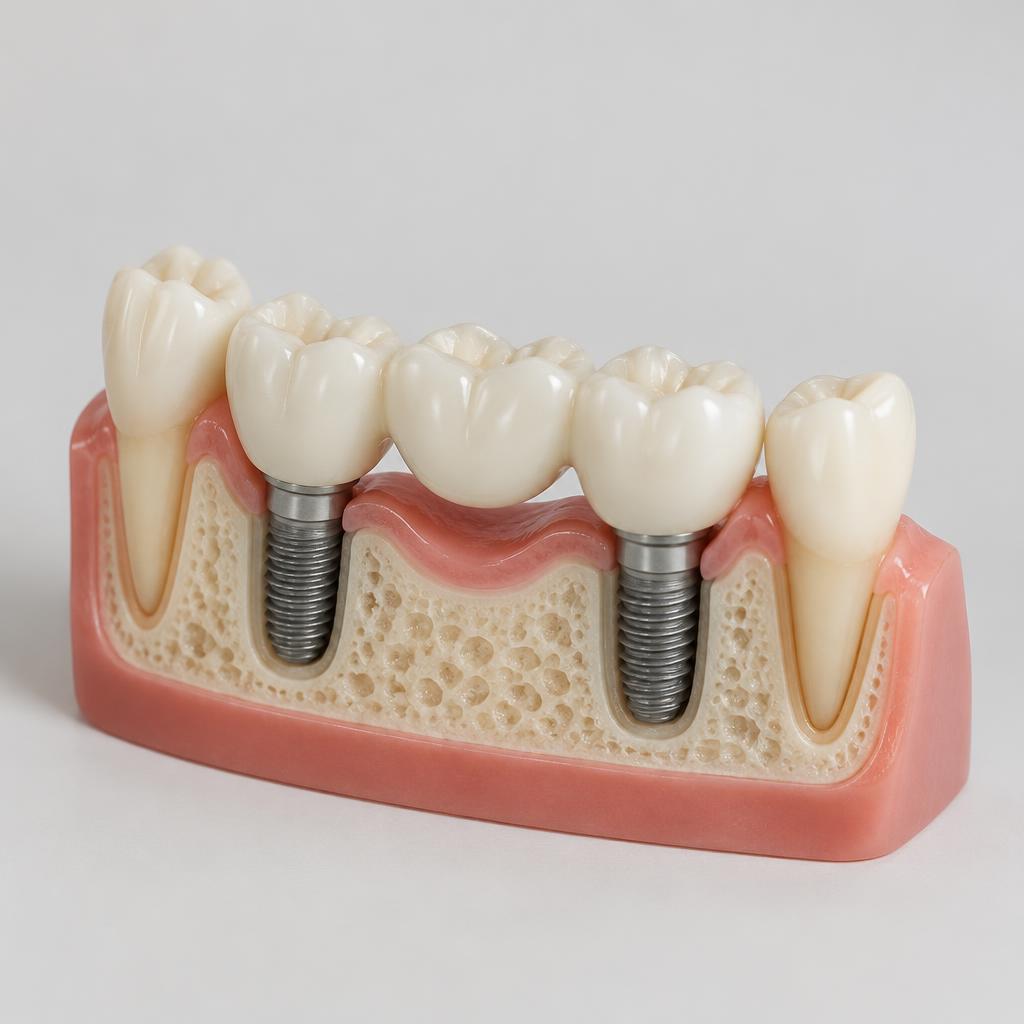
Clinical model of a three-tooth bridge supported by two implants with no implant beneath the middle tooth02Implant-supported bridgeHow it worksConnected replacement teeth span a gap, with implants supporting the bridge at planned positions. You do not necessarily need an implant for every missing tooth. This replaces a section of teeth rather than a complete denture.Teeth replaced & attachment

Several missing teeth in a row

Fixed bridge

Daily careBrush the bridge and clean beneath the connected teeth using the tools your dental team recommends.
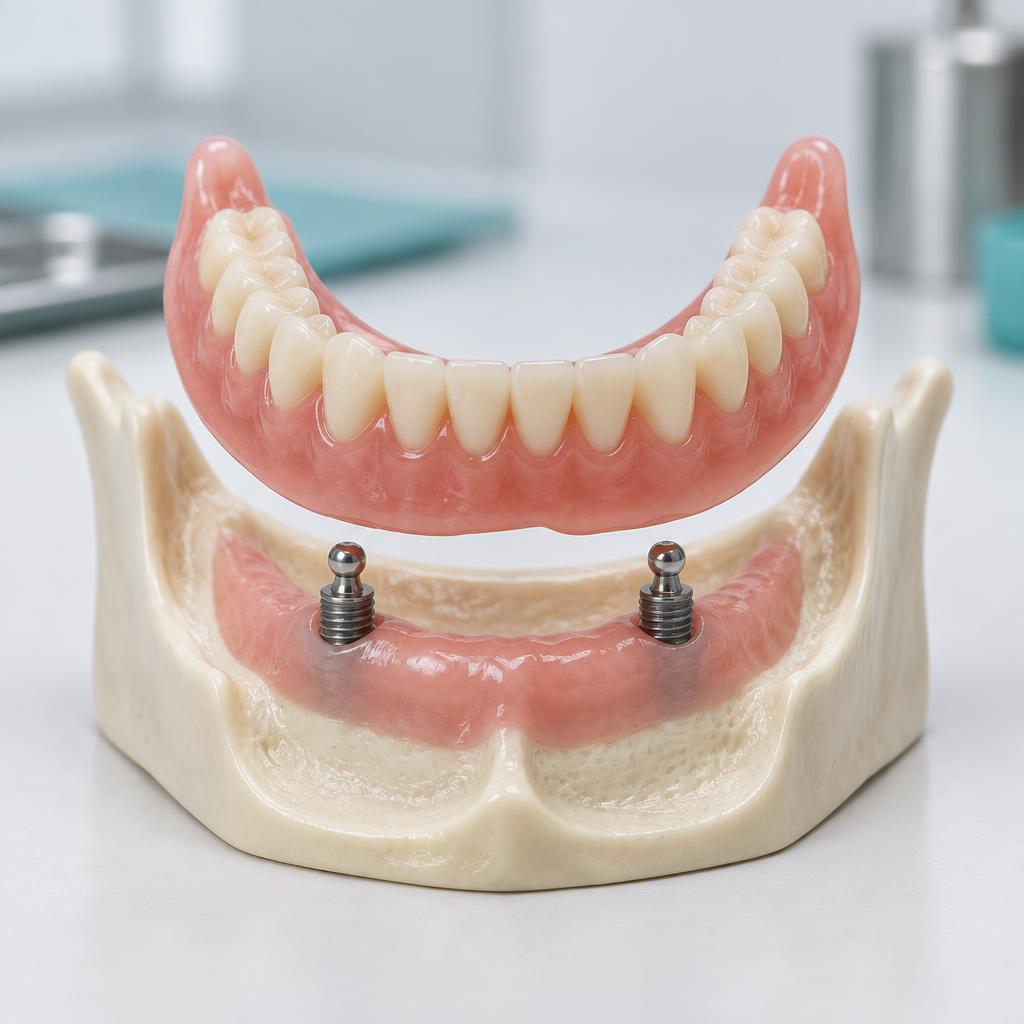
Removable lower overdenture lifted above two implant attachments in a gum model03Implant-retained overdentureHow it worksSometimes called a snap-in denture, this appliance connects to attachments on implants. The connections help hold the denture in place while you eat and talk. You can detach it at home for cleaning as instructed.Teeth replaced & attachment

A removable denture with implant anchorage

Removable · snap-in

Daily careRemove and clean the denture as directed, and clean the gums and implant attachments separately.
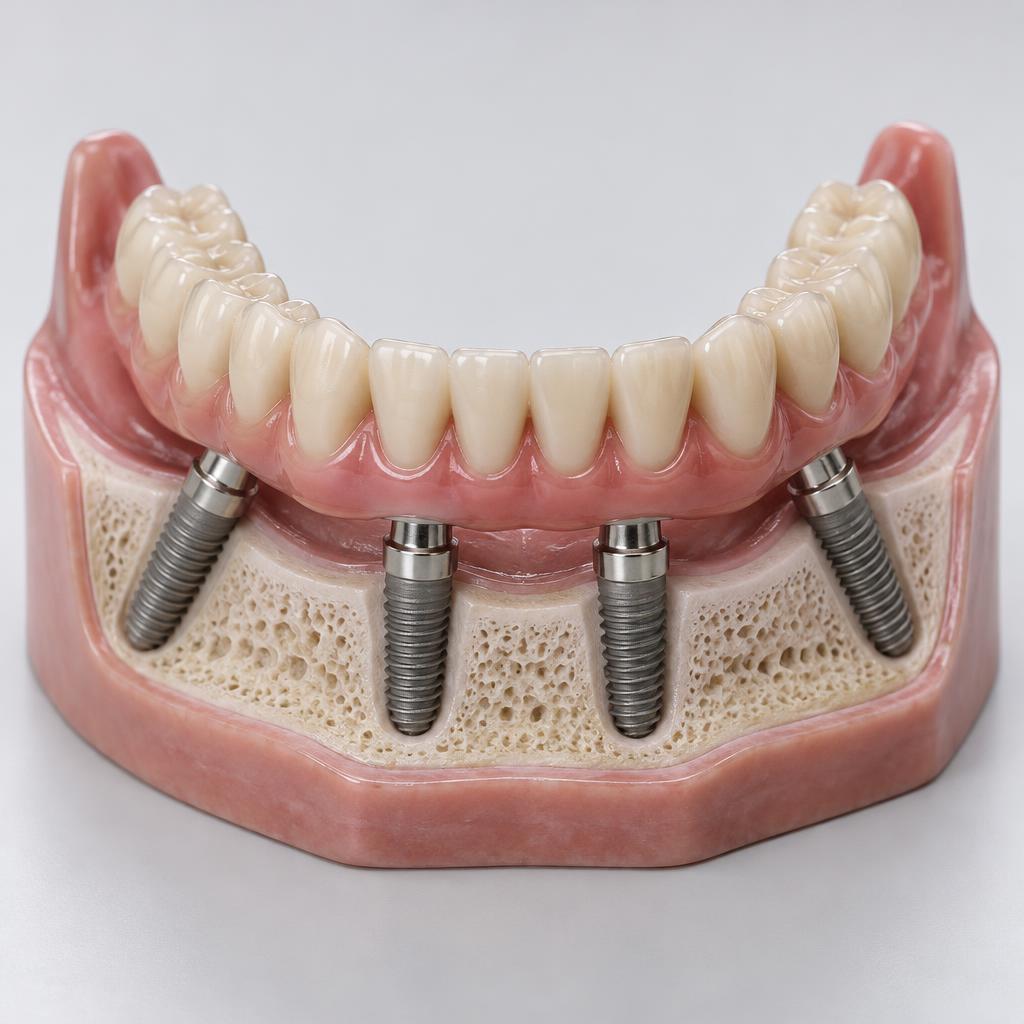
Full lower arch of replacement teeth secured to four implants in a cutaway jaw model04Fixed full-arch implant restorationHow it worksA complete arch of replacement teeth is secured to several implants. Full-arch approaches such as All-on-4 may be considered when appropriate; the implant arrangement is personalized. The prosthesis stays attached and is removed only by a dental professional.Teeth replaced & attachment

One complete upper or lower arch

Fixed · full arch

Daily careBrush the teeth and clean beneath the prosthesis daily; keep scheduled professional maintenance visits.
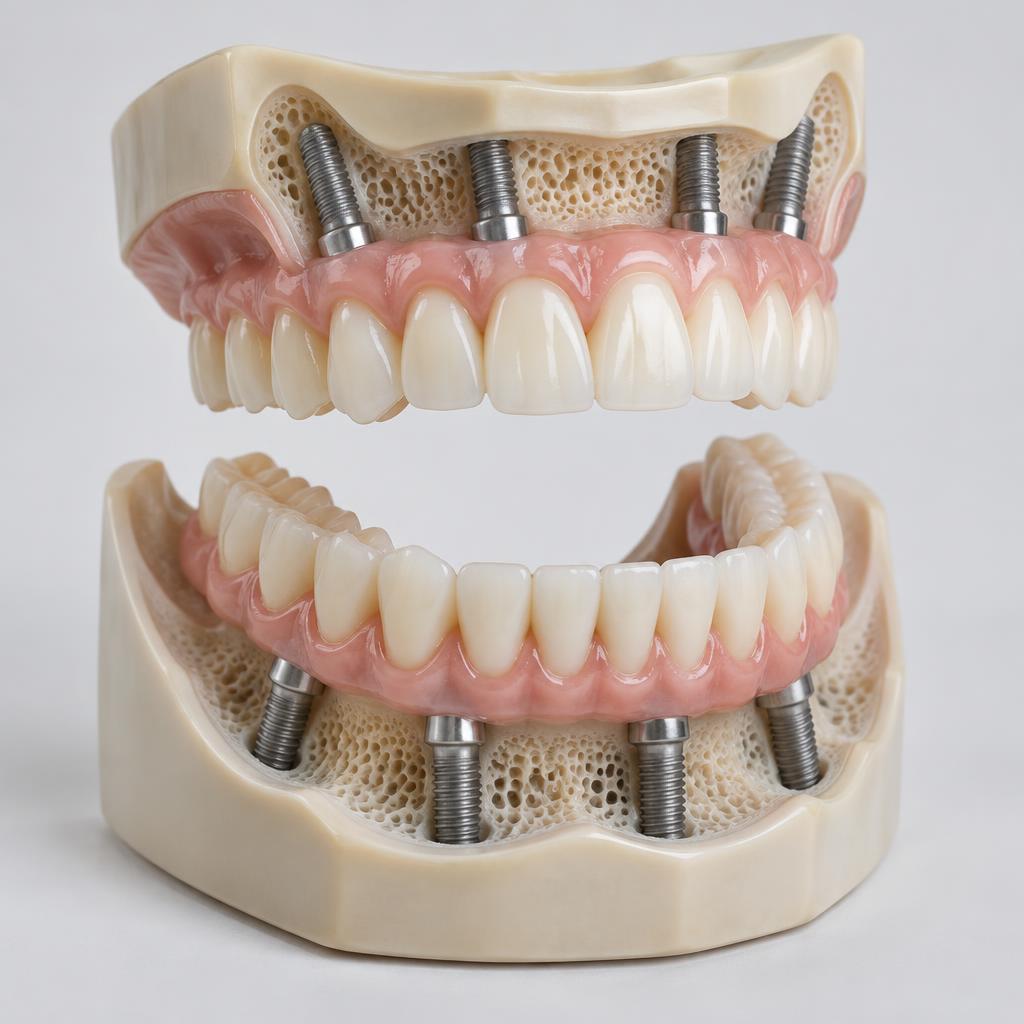
Upper and lower fixed replacement tooth arches with implants visible in both jaw models05Full-mouth implant restorationHow it worksWhen both jaws need a new set of teeth, two implant-supported arches are planned together. Each has its own implant foundation, while tooth shape and the bite are coordinated so the upper and lower restorations work together.Teeth replaced & attachment

Both upper and lower arches

Fixed · both arches

Daily careClean around and beneath both arches daily, with regular checks of the implants, gums, and bite.

AI-generated educational illustrations show example designs, not patient results. The number and position of implants, attachment system, and tooth materials depend on your examination and treatment plan. Full-mouth restoration combines treatment for both arches rather than introducing a different implant type.

A different foundation

Traditional Dentures vs. Permanent Dentures

Both restore your smile, but they get their support in different ways. Compare how they attach, how you care for them, and what they can mean for everyday eating and speaking.

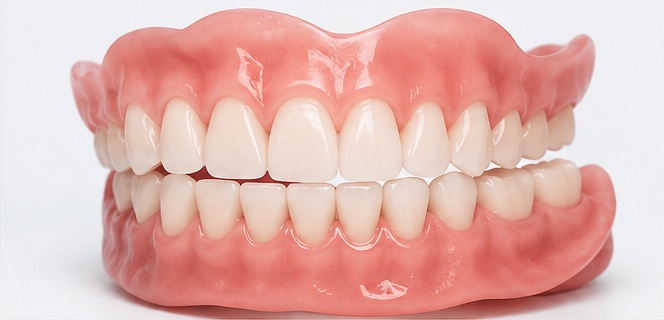
Traditional dentures compared with implant supported dentures
Traditional DenturesImplant Supported Dentures
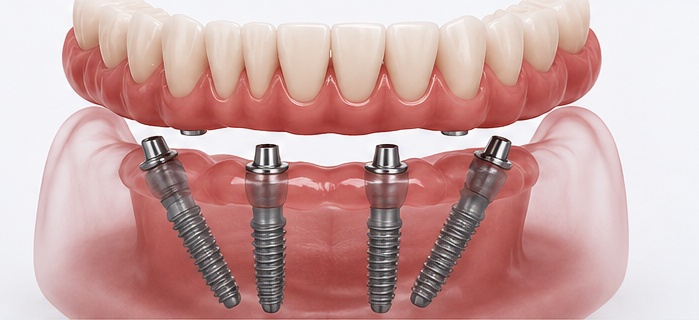
Upper and lower traditional dentures from the supplied comparison imageFull denture arch above four implants from the supplied comparison image
Foundation

Rests on the gums and follows the shape of your mouth.

Foundation

Connects to implants anchored in the jawbone.

Removal

Taken out at home for cleaning and usually overnight.

Removal

Fixed designs stay attached; snap-in designs are removable at home.

Stability

Fit depends on gum contours; movement can occur as your mouth changes.

Stability

Implant anchorage helps limit movement during eating and speaking.

Adhesives

An adhesive may be recommended to help with retention.

Adhesives

Implant attachments or fixed connections provide retention without denture adhesive.

Chewing

Food choices may need adjusting as you get used to the denture.

Chewing

Added support can make chewing more comfortable; follow your dentist’s guidance.

Bone support

Does not replace tooth roots or stimulate bone through implants.

Bone support

Implants transfer chewing forces into surrounding bone, helping maintain bone around them.

Cleaning

Clean the denture outside your mouth and gently clean your gums.

Cleaning

Remove snap-in dentures to clean; clean beneath fixed teeth and around implants.

Ongoing care

Regular checks help identify changes in fit and the need for adjustments.

Ongoing care

Regular checks monitor the implants, gums, attachments, and prosthesis.

A supported smile, shaped around your life. The right denture starts with a plan for your mouth.

The implant illustration shows a full-arch example. Implant supported dentures include fixed and removable designs; the number of implants and your cleaning routine depend on your treatment plan. Your dentist will explain which approach suits your oral health, bone support, and preferences.

The parts of your smile

Permanent dentures vs. dental implants

An implant and a denture do different jobs. The implant is a small post that replaces the support once provided by a tooth root. The denture is the set of replacement teeth attached to that support.

You do not necessarily need one implant for every missing tooth. Several carefully positioned implants can support a full arch. Your dentist plans the number and position based on available bone, bite forces, and the restoration being made. The teeth may be made from zirconia, acrylic, or other materials suited to your plan.

Everyday differences

Benefits of permanent dentures

A steadier fit

Implant attachments or a fixed connection help limit movement, so your teeth feel more secure when you talk, smile, and share a meal.

More comfortable chewing

A supported denture gives your bite a more stable foundation. As healing and adjustment progress, many people find eating feels easier.

Confidence in conversation

Less movement can mean less distraction from your teeth. You can focus on what you want to say instead of checking whether your denture is staying put.

Support for the jawbone

Implants transfer chewing forces into the bone, providing stimulation that a gum-supported denture alone does not. This can help maintain bone around the implants.

A long-term approach

With consistent cleaning and professional care, implants and their restorations can serve you for many years. Checkups help identify changes in fit, wear, or gum health.

Clinical model showing dental implants supporting a fixed lower denture within the jaw
Planning your foundation

Do you have enough jawbone?

Your jawbone supports the implants, so its shape and volume are important. After tooth loss, bone can gradually change because the missing roots no longer provide their usual stimulation.

An examination and appropriate imaging help us understand the bone available and where implants might be placed. If you have been told you have bone loss, that does not automatically end the conversation. Bone grafting or a different implant approach may be considered after a detailed evaluation.

We also review your gums, medical history, and bite. These details help shape a plan that is suitable for you rather than relying on a one-size-fits-all approach.

A personal decision

Are permanent dentures right for you?

You may be ready to explore implant-supported teeth if your current denture feels uncertain, you are missing many teeth, or you want to understand your long-term options. A consultation helps turn those questions into a plan.

There is no single design for everyone. We consider your oral health, jaw structure, habits, and whether you prefer teeth that come out or stay attached.

  • You are missing most or all of your teeth.
  • You currently wear a removable denture.
  • You would like more support when eating or talking.
  • You want to explore a fixed set of replacement teeth.
  • You prefer a removable denture with implant attachments.
  • You want a long-term plan with ongoing professional care.
Comfort in the moments that matter

Why consider an implant-supported smile?

Sometimes the wish for new teeth is really a wish to stop thinking about them at every meal or conversation. Implant support can make your denture feel more secure, helping you settle into a daily routine with fewer concerns about movement.

A natural appearance is part of the picture, too. Tooth shape, shade, and the way your upper and lower teeth meet are planned together. We talk through the look you want alongside the support your mouth needs.

Once your teeth are fitted, home cleaning and follow-up visits remain part of the plan. We show you how to care for your particular restoration and keep checking the implants, gums, and bite over time.

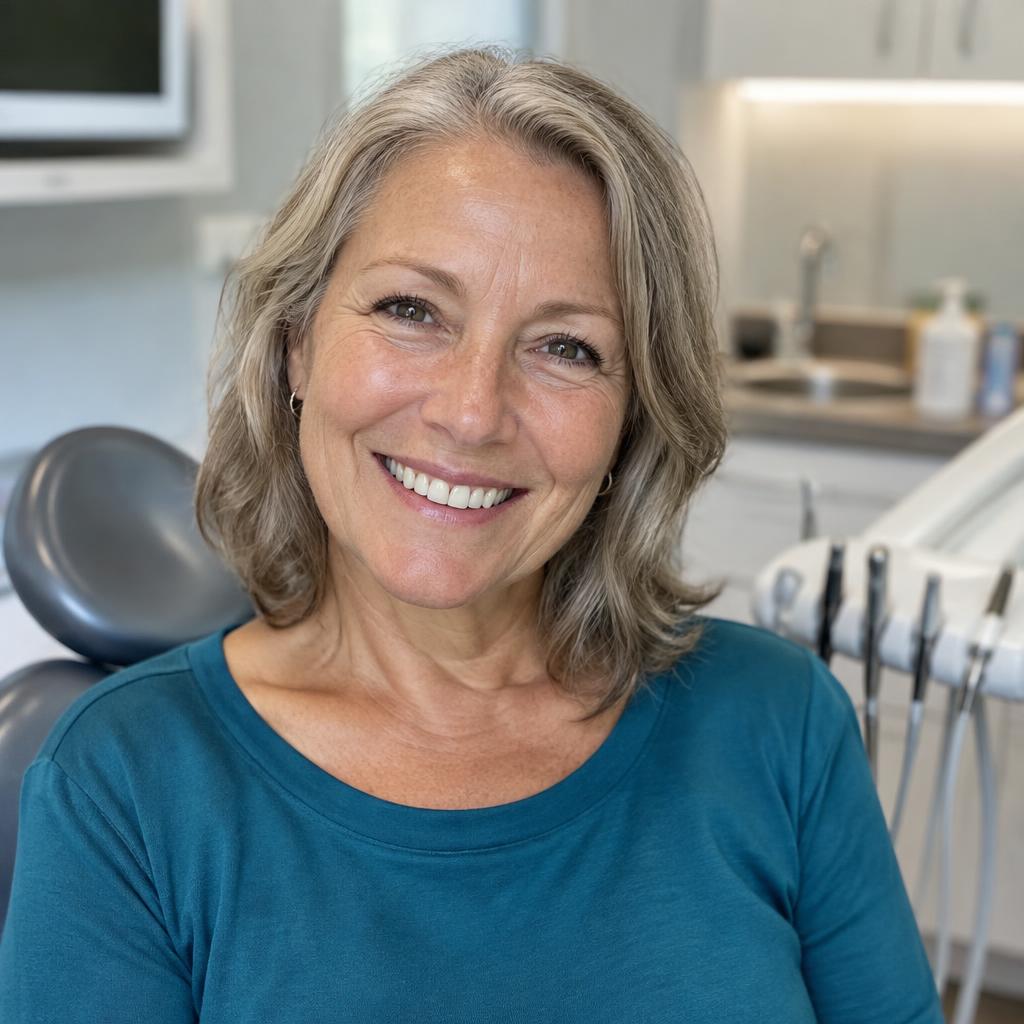
Older woman with a natural smile in a dental office
Dr. Victor Rosenson, founder of Dentures Plus
Dr. Victor Rosenson, DDS
Your dentist in Hawthorne, NJ

Talk with Dr. Rosenson about your options.

Dr. Victor Rosenson founded Dentures Plus in 2006 to bring personal dental care and modern tooth replacement to the Hawthorne community. Our approach begins with listening: how your teeth feel today, what you want to change, and what matters most to you.

At your consultation, we review your mouth, bone support, bite, and health history, then explain the denture designs that may fit your needs. You have time to ask questions and understand the next steps before choosing a direction.

Your questions, answered

FAQs about permanent dentures

Google

What our denture patients say

“Beautiful office and delightful staff. I received exceptional care and am happy with my new dentures. They feel good and look natural, and the assistant made sure I knew exactly how to care for them.”

Lynn Carter

Local Guide · Google review

“I got my dentures fitted by Dr. Rosenson today and I am impressed. Such a great fit, and the whole team made it possible to get them quickly without any issues. Highly recommend Dentures Plus.”

Dan Guthrie

Google review

“Not your ordinary dental office. You are greeted the moment you walk in, the office is immaculate, and everyone is super nice. They respect your time and explain every option clearly.”

Shirley Tan

Google review

“I chose the Lifelike dentures, and being able to preview them before they were finished made all the difference — nobody can tell they aren't my own teeth.”

Maria S.

Google review

“My partial fits perfectly and I forget it's there. Dr. Rosenson walked me through the metal and flexible choices and helped me understand which one suited me best.”

Frank D.

Google review

“Honest answers and attentive care throughout. After years of putting it off, I finally have a smile I'm not hiding in photos.”

Denise W.

Google review